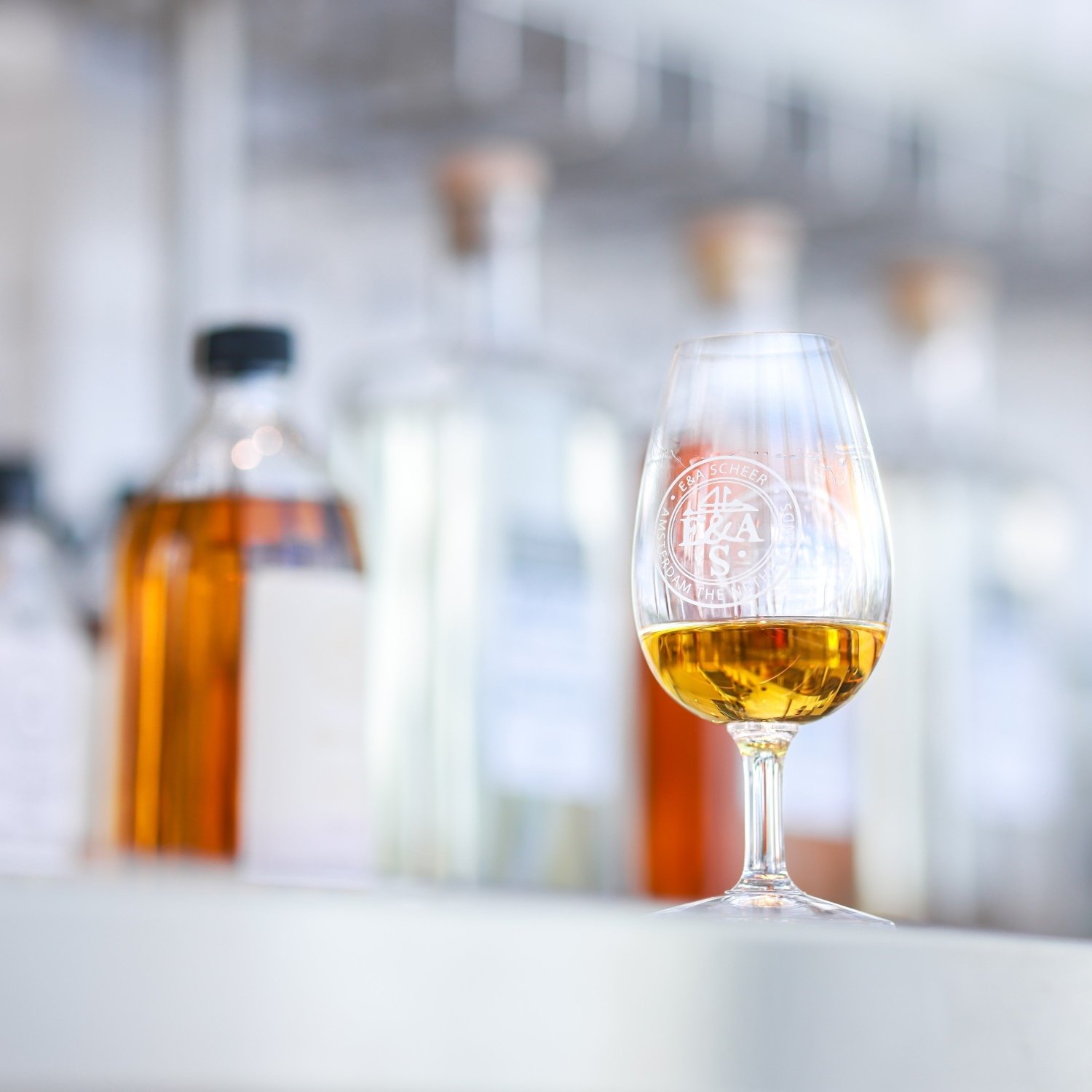
Twenty years ago, a Financial Times writer visited E&A Scheer’s Amsterdam offices. They worked through a flight of Jamaican Rums, each funkier than the one before. The final glass was Hampden’s DOK, the estate’s most intense mark: a Rum made to power blends rather than be sipped.
Looking back on that tasting, the FT traced how a flavour once confined to the blending room has become one that drinkers go looking for. For anyone buying Jamaican Rum in bulk, that matters. Because what was once added by the spoonful is now asked for by name.
Why high-ester Rum deserves a buyer’s attention
Funky Rum is an old taste, not a new one. As early as 1702, a Philadelphia merchant wrote of customers wanting “the right rum stink” – the pungent character known as hogo. By the late nineteenth century, tastes had evolved. Hogo came to be seen as a flaw, and producers began filtering it out to create lighter Rums. (Source: SevenFifty Daily)
Esters are the aromatic compounds behind Rum’s fruit, funk and depth. Their concentration varies enormously from one style to the next. Hampden’s lightest mark, OWH, carries 40 to 80 grams of esters per hectolitre of pure alcohol (g/hLAA). Hampden DOK carries 1,500 to 1,600. (Source: Cocktail Wonk.)
Read our guide to high ester Rum to learn more about esters.
Hampden’s own story mirrors the journey from blend to bottle. Until the early 2000s, most of its Rum was sold in bulk to traders and blenders, to disappear into other blends. In 2011 it began bottling under its own name, and this year its Great House Distillery Edition 2025 won the IWSC Rum Trophy.
What buyers once used as a seasoning is now a selling point. That changes how much you need, how early you ask, and what you look for.
What drinkers want: provenance, intensity and a story
Three Rum consumer trends explain this demand.
#1 Many brands are targeting whisky drinkers. Bar owner Nico de Soto finds customers respond to Rums that feel structured, dry and layered rather than sweet. He also notes that many consumers still associate Rum with cocktails, sweetness or party drinking. (Source: Global Drinks Intel.)
#2 Numbers have become part of the story. The four Hampden marks in Great House 2025 run from 80 to 1,400 g/hLAA. A Rum ester count that was once lab data is now something enthusiasts compare.
#3 Production methods sell. Hampden ferments for two weeks to a month or more with natural cultures, dunder and muck pits, then distils in double-retort pot stills. Typical Rum ferments for one to three days. That contrast is a strong story, and an easy one to tell.
The revival began behind the bar. As long ago as 2017, SevenFifty Daily described how curious bartenders drove demand, and how importers and distillers responded by bringing back high-ester Rums from Jamaica, Guyana and Saint Lucia.
A story told truthfully, from ester range to fermentation time, is now part of the product. Provenance Rum sells on detail, and buyers who can supply it have an advantage.
Formulating with funk: intensity, balance and consistency
Intensity is a choice. Jamaican Rum marks run from the very light to DOK, so selecting a mark is largely selecting how much funk the blend will carry.
|
Selected Hampden mark
|
Ester range (g/hLAA)
|
|
OWH
|
40 to 80
|
|
LROK
|
300 to 400
|
|
HGML
|
1,000 to 1,100
|
|
C◆H
|
1,300 to 1,400
|
|
DOK
|
1,500 to 1,600
|
Sources: Cocktail Wonk; Forbes.
DOK Rum is rarely a stand-alone pour. Instead, our blenders use it in small measures to lift the ester content of a blend. In high-ester Rum blending, proportion is everything.
Limited editions and cocktail-led expressions suit funk, because they can carry a stronger point of view than a core range.
Rum consistency needs planning. Hampden adds no yeast, relying instead on a natural mix of microbes, so some variation between batches is inevitable. Good Rum formulation allows for this, and a blending programme smooths it out.
The cost of a high-ester Rum is only partly the price. The rest is the skill to use it well, and keep it tasting the same batch after batch.
Route to market: from the bar to the bottle shop
The on-trade is usually where drinkers first meet high-ester Rum, and bartenders were the ones who brought funk back into view. Specialist spirits retail follows, where the demand for Rums over £100 noted earlier gives premium bottlings a clear audience.
Rum education is part of the work. Bar managers report that many guests still see Rum as mojitos and spiced Rum rather than something to sip neat. Distributors and bartenders who know why a funky Rum costs more are better placed to sell it.
Ultimately, a distinctive Rum needs people who can explain it. Premium Rum distribution built around those people saves brands a slow start.
Strategic procurement: planning supply in a constrained market
High-ester Rum supply is tight because the liquid takes time.
|
Production stage at Hampden
|
Typical duration
|
|
Fermentation
|
At least two weeks, often a month or more
|
|
Rest in vats before distillation
|
About a week
|
|
Single pot-still distillation run
|
Around seven hours
|
Source: Fine Spirits Auction.
With so few distilleries in one place, a single event can significantly impact supply. After Hurricane Melissa struck Jamaica in October 2025, the Spirits Pool Association projected a 20% fall in output for 2025 to 2026 – or possibly even 30%. (Source: The Gleaner.)
Hampden was expected back online by late January 2026, and all distilleries by the end of February. Those were projections at the time, so current availability should be checked.
Provenance rules matter too. Under the Jamaican Rum GI, ageing must take place in Jamaica. Bulk Rum held abroad requires independent audit verification. And blending with non-GI Rum removes the right to use the GI. Revisions passed in 2024 were reported as on hold pending litigation.
When availability depends on a handful of distilleries, forward planning beats spot-buying. In bulk Rum procurement, forward contracting does two useful things: it secures volumes early, and it settles exactly which mark you need.
Few distilleries, a long production cycle and weather exposure add up to Rum supply risk that rewards early conversations.
The E&A Scheer advantage: long experience with funk
Amsterdam, where that FT tasting took place, is still the home of E&A Scheer. As a bulk Rum supplier, we work with more than 60 suppliers in over 40 countries.
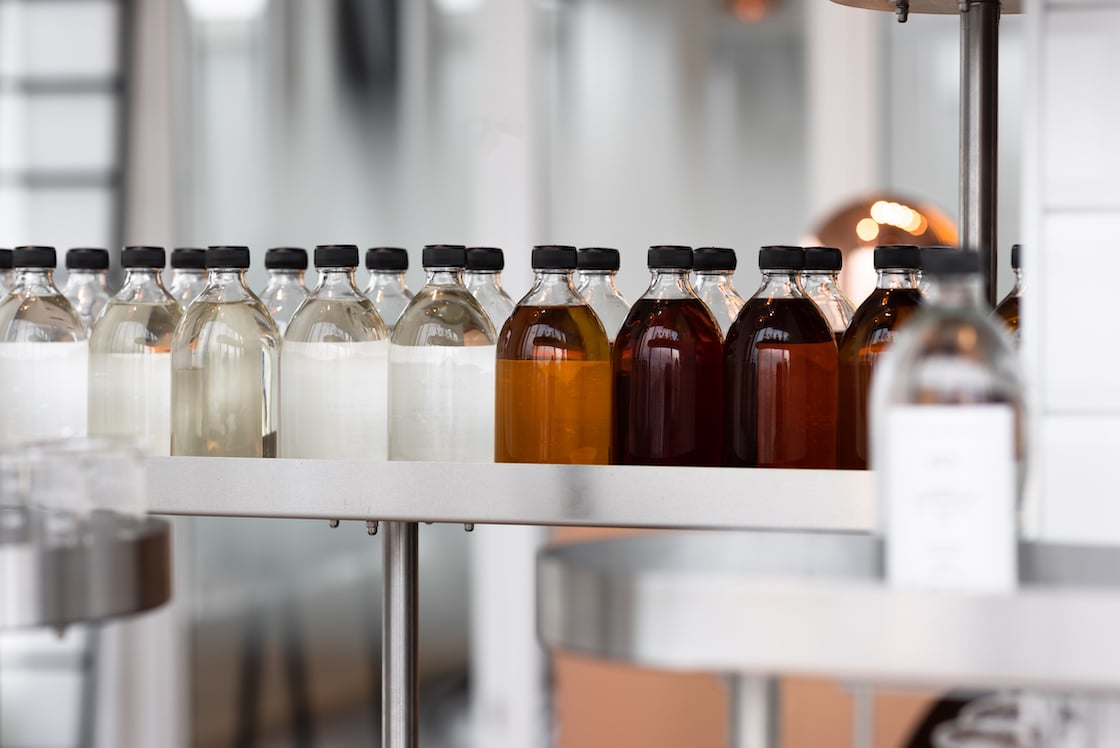
We build intermediate blends, then combine them with single-source Rums to create each customer’s recipe in volumes from 200 litres to 25,000-litre ISO tanks. Our small team of Master Blenders tests combinations and ratios against a target profile, which matters most to brands without a distillery of their own.
That means taking an intense distillate such as DOK and using it in exactly the right proportion, so the result is consistent and suited to your drinker.
E&A Scheer has been trading Rum since 1712, and Jamaican marks have been part of our blending for generations. Most buyers come to high-ester Rum with a taste in mind and a deadline. Our experience shortens the route between the two.
Explore custom Rum blends with our Blending Tool, or contact our specialists about Jamaican Rum sourcing.
Frequently asked questions
What are esters in Rum?
The aromatic compounds behind fruit, funk and depth in Rum. Producers such as Hampden group Rums into marks by esters per hectolitre of pure alcohol. The higher the number, the more intense the Rum.
What does a mark like DOK mean?
DOK is Hampden’s most intense mark, at 1,500 to 1,600 g/hLAA, compared with 40 to 80 for its lightest.
Why is high-ester Rum used in small amounts?
Its intensity means a little goes a long way. DOK, for example, is used to add a large dose of esters to blends.
Why is high-ester Rum hard to scale?
It is slow to make. Fermentation lasts two weeks to a month or more, followed by about a week of rest. Typical Rum ferments for one to three days.
Is funk a new trend?
No. Records from as far back as 1702 show drinkers asking for pungent Rum. The style fell out of favour in the late nineteenth century before bartenders revived it.
How is the market for premium Rum doing?
Overall Rum is flat, with IWSR forecasting 0% CAGR from 2024 to 2029. Premium-and-above is expected to grow while standard and value decline.
What does the Jamaican Rum GI mean for bulk buyers?
Ageing must happen in Jamaica, bulk Rum held abroad needs independent audits, and blending with non-GI Rum removes the right to use the GI. Revisions from 2024 are reported as on hold.