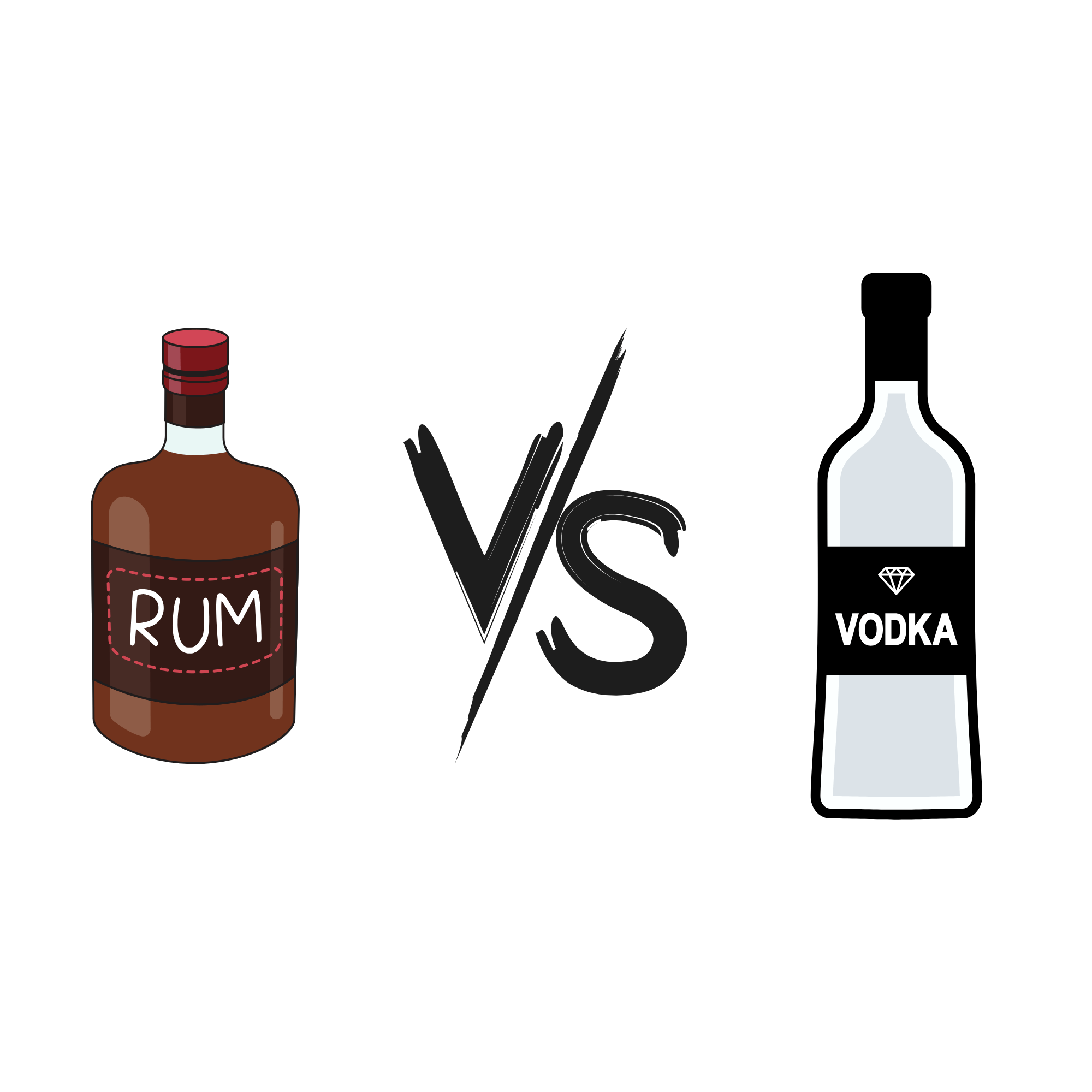
You will rarely come across a cocktail menu without a long list of drinks crafted from Rum and Vodka (or both). Yet from a sourcing perspective, these two spirits could hardly be more different. Raw materials, production methods, flavour profiles, cost structures and market positioning all diverge in ways that matter to brand owners, product developers, and procurement teams.
This short guide will take you through those differences from the viewpoint of an industry specialist.
As one of the world's leading bulk Rum suppliers, E&A Scheer has spent over three centuries sourcing, blending and supplying Rum to the drinks, confectionery, and flavour & fragrance industries.
How is Rum made differently from Vodka?
Although both Rum and Vodka are distilled spirits, they follow fundamentally different production paths. For B2B buyers, these differences directly influence flavour outcomes, cost structures and the kinds of products you can bring to market.
Raw material selection
Vodka relies on starchy raw materials, most commonly grains such as wheat, rye and corn, although potatoes are also used. The choice of grain can subtly influence texture, but the overriding goal remains neutrality.
Rum is produced exclusively from sugarcane derivatives. Molasses, the thick by-product of sugar refining, is the most widely used base. Fresh sugarcane juice forms the foundation of Rhum Agricole , a style unique to the French Caribbean and subject to strict AOC regulation in Martinique. Each base ingredient influences the final spirit in its own distinct way, giving Rum producers a far broader palette to work with before distillation even begins.
Fermentation strategy
Vodka producers prioritise speed and cleanliness, selecting yeast strains that tolerate high alcohol concentrations and produce a wash with as few congeners as possible.
Rum fermentation is more deliberate. Distillers often deploy specialised yeast strains, and fermentation periods can stretch to three, four or even five days. This extended timeline encourages the development of esters, the compounds that contribute fruity, floral and sometimes funky notes.
Shorter periods produce a lighter spirit, while longer ones build greater depth. The fermentation strategy is one of the first creative decisions a Rum producer makes.
Distillation and rectification
Vodka is defined by its purity. Regulations in most markets mandate distillation to a minimum of 96% ABV using continuous column stills. The aim is to produce a spirit as neutral and odourless as possible.
Rum distillation encompasses a much broader spectrum. Pot stills operate in batches, yielding richer, heavier spirits with real character. By contrast, column stills operate continuously and produce lighter, more consistent profiles. Many blends, including those we create at E&A Scheer, combine distillates from both methods. You can explore these in our guide to pot stills vs. column stills.
Maturation
Vodka is almost never aged. Once distilled, it is typically charcoal-filtered, diluted, and bottled within weeks.
Rum is frequently matured in oak barrels. The previous contents of these barrels, whether bourbon, sherry or port, impart additional layers of flavour. Over months or years, the spirit gains colour, complexity, and notes of vanilla, caramel and spice. Rum aged in tropical climates matures more quickly, whereas Rum aged in cooler European warehouses develops more gradually, preserving subtlety and nuance.
Rum vs. Vodka: the taste difference
These production differences directly translate into contrasting sensory profiles, making them essential knowledge for anyone formulating products or selecting a base spirit.
Neutrality vs. complexity
Vodka offers a clean, almost transparent finish.
That neutrality is its greatest asset, allowing other ingredients to take centre stage. Rum is inherently sweeter, warmer and more layered. Depending on the style, expect notes of caramel, vanilla, tropical fruit, molasses, baking spice, or the grassy, herbaceous qualities of Agricole expressions.
The role of congeners
Esters, aldehydes, higher alcohols, and organic acids all contribute to aroma and taste.
Rum deliberately retains a high concentration of these compounds, while Vodka strips them away through repeated distillation and filtration. One spirit seeks character. The other seeks purity.
Mouthfeel and texture
Rum, particularly heavier pot-still expressions, often possesses a more viscous, rounded mouthfeel.
Vodka delivers a lighter, crisper sensation. For formulators working on ready-to-drink products, this textural difference has practical implications for how the finished product is perceived.
Formulation impact
Vodka blends seamlessly into almost any combination without overpowering other ingredients.
Rum, however, plays a different role. Its natural sweetness and complexity make it the defining flavour in a formulation, which is why it sits at the heart of bold, tropical and spice-forward drinks.
Production economics and operational efficiency
Flavour and identity are only part of the equation. The financial characteristics of each spirit carry equal weight.
Profit margins and still efficiency
High-purity Vodka requires high-rectification column stills with multiple plates. While these represent a significant capital investment, they deliver strong energy and labour efficiency at scale. Unaged column-still Rum can be produced with comparable efficiency. Pot-still Rum involves batch processing, which is more labour-intensive but often commands a higher price point in premium segments.
Raw material costs
Molasses is abundant and, in many markets, highly cost-efficient compared to the premium grains used in Vodka. This can give Rum producers a meaningful advantage on input costs at scale. That said, prices for both fluctuate in line with commodity markets and agricultural policy, so a supplier with a diversified sourcing network is a practical safeguard.
Inventory turnover
Unaged white Rum and Vodka both offer a fast return on investment, with production-to-sale timelines measured in weeks. Aged Rum ties up capital in barrel stock and warehouse space, but the trade-off is access to the premium tier where margins are substantially higher and consumer demand continues to grow.
2026 market considerations
As the spirits market evolves, both Rum and Vodka are adapting to shifts in consumer behaviour. Right now, two trends in particular are shaping sourcing decisions.
Premiumisation. Projections for the global Rum market in 2026 vary depending on the source owing to differences in methodology and scope.
Research and Markets estimates the market at approximately $15.98 billion.
Grand View Research projects a compound annual growth rate (CAGR) of 4.3% through 2030, from a 2024 base of $18.47 billion.
Regardless of specific figures, the direction is clear: a pronounced shift towards premium expressions with verifiable origins. For sourcing professionals, this translates to increasing demand for traceable, high-quality Rum with authentic provenance.
The RTD boom. Consumer preferences are increasingly favouring convenience formats. Spirits-based ready-to-drink (RTD) products continue to gain popularity, and Rum's natural sweetness and versatility make it an ideal base for this expanding segment.
Rum vs Vodka: An industrial comparison
|
Feature
|
Industrial Vodka (NGS)
|
Bulk Rum
|
|
Primary Base
|
Grains or potatoes
|
Sugarcane (molasses/juice)
|
|
Purity Target
|
96% ABV (minimises congeners)
|
60-85% ABV (retains esters)
|
|
Still Type
|
Multi-plate continuous column
|
Pot or Column
|
|
Ageing
|
Rare/not permitted in wood
|
Common (oak maturation)
|
|
2026 Market Value
|
Highly resilient (RTD base)
|
Strong growth (premium focus)
|
Sourcing bulk spirits with E&A Scheer
Choosing between a neutral Vodka base and a more complex Rum requires genuine technical expertise and a partner who understands both the product and the market.
Our Master Blenders can help you determine whether a neutral base or a bespoke Rum blend better aligns with your target margins, flavour goals, and brand positioning.
With access to Rums from over 40 distilleries and origins, E&A Scheer provides the scalability and reliability required for modern private-label and brand programmes. Our central Amsterdam warehouse delivers with lead times of just 7 to 10 business days.
Take the first step with our blending tool or contact our specialists to discuss your sourcing needs.