Rum vs. Tequila: A Strategic Sourcing Comparison for Bulk Buyers
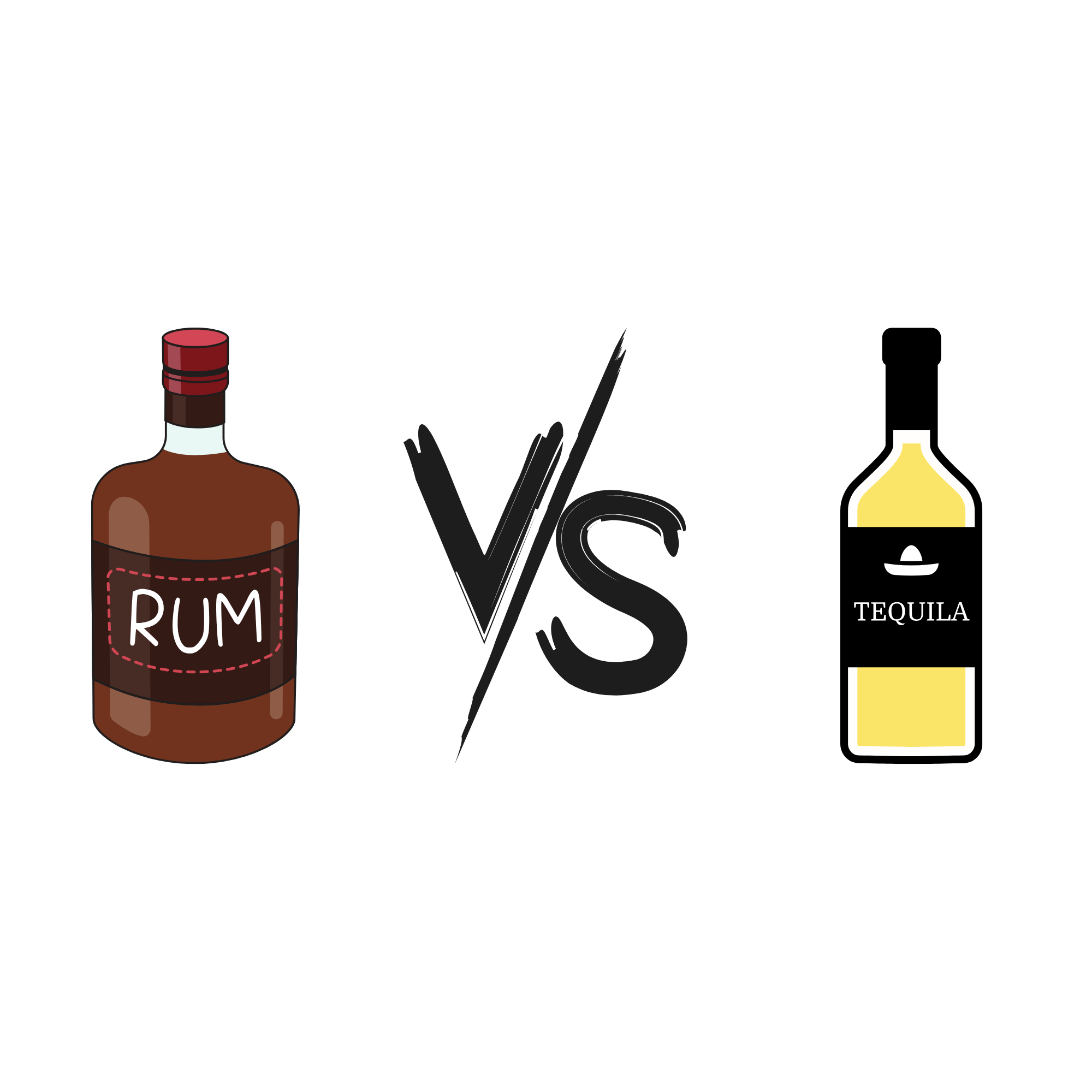
Walk the floor of any major spirits trade show and two categories dominate the conversation: Rum and Tequila. Both carry centuries of heritage, command loyal followings, and have become serious targets for brand investment and product innovation.
For B2B buyers, the choice between them is ultimately a decision between two of the most heritage-driven categories in the spirits market.
Yet from a sourcing perspective, the differences extend far beyond flavour. Tequila is bound by strict regional regulations, limiting production to specific states in Mexico and tying supply to a single raw material that takes six to eight years to grow.
Rum operates on an entirely different scale. Produced across more than 50 countries from the Caribbean and Latin America to Africa and Asia, it offers a spectrum of styles, giving brands unmatched formulation flexibility.
Production geography, raw material availability, regulatory frameworks, and supply chain resilience all shape how these two spirits perform for bulk buyers. This article compares them clearly, helping brand owners and procurement teams make well-informed decisions about which spirit suits their next project.
How is Rum made compared to Tequila?
Rum is produced from sugarcane by-products, primarily molasses or fresh cane juice. Sugarcane is a fast-growing crop cultivated across the tropics and subtropics, from the Caribbean and Latin America to Africa, Asia, and beyond. This global availability gives Rum an inherently resilient supply base.
Tequila is a different matter entirely. It must be produced from at least 51% Blue Weber Agave, a plant that takes six to eight years to reach maturity. The spirit also carries a Protected Designation of Origin (PDO), meaning production is restricted to specific states in Mexico, principally Jalisco. This geographic concentration directly impacts supply chain stability, particularly during periods of agave shortage.
Rum does have its own regional Geographical Indications. Jamaican Rum, Rhum Agricole de Martinique, and Cachaça all carry protected status. But these GIs sit within a much broader global category. Rum is distilled in more than 50 countries, meaning no single region, regulation, or weather event can disrupt supply across the board. For bulk buyers, that is the difference between a category with regional character and one with genuine supply chain resilience.
Rum vs Tequila: Distillation
Distillation approach is another key distinction, and one where Rum producers enjoy considerably more freedom.
Rum producers use both pot stills and column stills, either independently or in combination. Pot stills retain more congeners and esters, creating heavier, more complex spirits. Column stills produce cleaner, lighter distillates ideal for high-volume applications. Rum is typically distilled across a wide ABV range, giving producers precise control over the final spirit.
Tequila, by contrast, is typically double distilled in pot stills targeting a lower final ABV to preserve the earthy agave character — a narrower process that limits formulation flexibility.
You can read more about how distillation methods shape Rum character in our guide to pot stills vs. column stills.
Rum vs Tequila: Ageing
Both spirits use oak ageing to develop colour, complexity, and depth. Ex-bourbon barrels are common to both, but Rum producers have access to a considerably broader range of cask types, including sherry, port, wine, cognac, and virgin oak. This allows for a far wider range of aged expressions and flavour outcomes. You can explore the full range of cask options in our guide to casks for ageing Rum.
What does Rum taste like compared to Tequila?
Flavour is where these two spirits diverge most noticeably for consumers and most practically for formulators.
Rum – a world of character
Rum offers an exceptionally wide sensory range. At the lighter end, column-distilled white Rums are clean, neutral, and highly versatile. Move toward heavier pot still expressions and you encounter rich notes of tropical fruit, warm spice, and dark molasses.
Aged Rums add layers of vanilla, caramel, and oak, making Rum a genuinely flexible ingredient across multiple applications, from RTD cocktails and premium sipping spirits to confectionery and flavour production. In overproof expressions, elevated ABV acts as an amplifier for aromatic compounds, adding warmth and intensity that carries well in both cocktail and culinary applications.
Tequila – focused on the flavour
Tequila has a more defined and distinctive character rooted in the agave plant itself. Expect earthy, peppery, and vegetal notes, often accompanied by citrus brightness in Blanco expressions and more rounded, oaky complexity in aged variants. Its flavour tends to focus on terroir rather than alcohol-driven intensity.
This profile is recognisable and beloved, but it is also less flexible. Tequila works best as the star performer in drinks like the Margarita or Paloma, where its distinctive agave character needs to remain front and centre. It is less suited as a background or blending ingredient.
Can you substitute Rum for Tequila?
In some formulation contexts, yes. The substitution requires careful consideration, but it can be both commercially and technically viable.
RTD cocktails are perhaps the most obvious opportunity. An unaged or lightly aged white Rum can replicate some of the vegetal brightness found in a Blanco Tequila while typically offering a lower entry cost and a more flexible supply chain. For private label projects where brand identity is still being defined, this flexibility can be a genuine commercial advantage.
Culinary and confectionery applications almost always favour Rum. The sugar-derived sweetness and concentrated caramel notes in aged Rums make them a staple ingredient in chocolate, cakes, ice cream, and flambéed desserts. Tequila lacks the caramel-forward profile that culinary applications typically require. Read more about Rum in the confectionery industry.
Private label projects are another area where Rum holds a practical advantage. It offers greater flexibility in final ABV specifications for regulatory compliance across markets, and sourcing from multiple origins considerably reduces the transport cost and concentration risk that comes with a single-country PDO supply chain.
Substitution is not always appropriate and where the Tequila character is central to a brand story, there is no meaningful replacement. But where formulation flexibility exists, Rum often delivers comparable or superior results at a more predictable cost and with greater supply security.
Global market trends and 2026 growth
Both categories are growing, though the drivers differ by region.
Tequila growth remains heavily concentrated in North America. According to Grand View Research, North America will account for over 60% of global Tequila revenue in 2026, with the United States the undisputed engine of that demand. While the market remains substantial, its geographic concentration carries risk.
Many industrial buyers have responded by moving from spot purchasing towards structured long-term supply agreements, a strategic shift driven by trade policy volatility and the structural constraints of a single-origin supply chain.
Rum's growth outlook is broader and more evenly distributed. North America is expected to become a fast-growing market for premium and flavoured variants. In Europe, consumers are shifting towards low-ABV, flavour-forward RTDs, opening new formulation opportunities for Rum-based products. And in Asia-Pacific, continued premiumisation is supporting demand across both mainstream and craft expressions.
The rise of the RTD
The RTD category represents a significant trend for both spirits. According to IWSR, RTDs grew 2% in volume in 2024, making them one of the only beverage alcohol categories to record growth that year, outperforming beer and wine. IWSR further forecasts that RTD cocktail and long drink volumes could double globally between 2019 and 2029, with North America potentially seeing growth of up to 400% over that period.[1]
Both Rum and Tequila feature prominently in this shift. Rum’s broader flavour range, wider ABV flexibility, and more resilient supply chain make it particularly suitable for brands building scalable RTD programmes over the long term, offering a level of supply chain resilience that Tequila, as a single-origin PDO spirit, cannot match.
Sources: Mordor Intelligence, Global Spirits Market Report 2025; Grand View Research, Tequila Market Report 2024; IWSR, Global Trends Report 2025 and preliminary 2024 data release.
Industrial comparison at a glance
|
|
Rum |
Tequila |
|
Raw material |
Sugarcane molasses or cane juice |
Blue Weber Agave (6–8 yr maturation) |
|
Geographic origin |
Global (50+ countries) |
Mexico only (PDO restricted) |
|
Distillation styles |
Pot still, column still, or both |
Typically double distilled in pot stills |
|
Distillation ABV range |
Wide range; precise control over congeners and esters |
Lower ABV target to preserve agave character |
|
Flavour profile |
Caramel, vanilla, tropical fruit, spice |
Earthy, peppery, vegetal, citrus |
|
Ageing options |
Ex-bourbon, sherry, port, wine, cognac, virgin oak |
Primarily American and French oak |
|
Supply chain risk |
Low (diversified global sourcing) |
Medium to high (agave supply constraints) |
|
RTD suitability |
Excellent across all styles and ABV ranges |
Strong, but limited by cost and supply |
|
Regulatory complexity |
Regional GIs, no single PDO |
Strict Mexican PDO regulations |
|
Transport flexibility |
Multi-origin sourcing reduces concentration risk |
Single-country origin adds logistical risk |
Sourcing Rum with E&A Scheer
E&A Scheer provides the scale, consistency, and blending expertise required for modern spirits programmes, whether your brand needs a heritage-led aged Rum or a flexible base for a new global RTD range.
With access to Rums from over 40 distilleries and origins worldwide, our master blenders work with you to develop custom expressions tailored precisely to your specifications.
Whatever your flavour target, volume requirement, or price point, we can create a custom blend that continues to meet your goals batch after batch.
Use our Rum blending tool to begin exploring your options, or contact our specialists to discuss your next Rum project in detail.